
From Backyard Birds to Greeting Cards: Why I chose Australian Magpies, Rosellas and Fairywrens for my first card collection.
I’d like to introduce you to some of my favourite birds - the Australian Magpie, Crimson Rosella, Eastern Rosella and Superb Fairywren - and share why they were among the first I decided to draw.
Over the past few years, I’ve found myself searching for a stronger connection with the world around me. Long walks in the bush became an important way to slow down, breathe and relieve some of life’s ‘weight’, even if only for a little while. But because those walks aren’t possible every day, planting a native garden was a way of bringing a little of the bush home with me. It worked! Our bottlebrush, woolly bush, melaleuca, flowering gum, grevillea and banksia now attract a steady stream of feathery friends throughout the year.
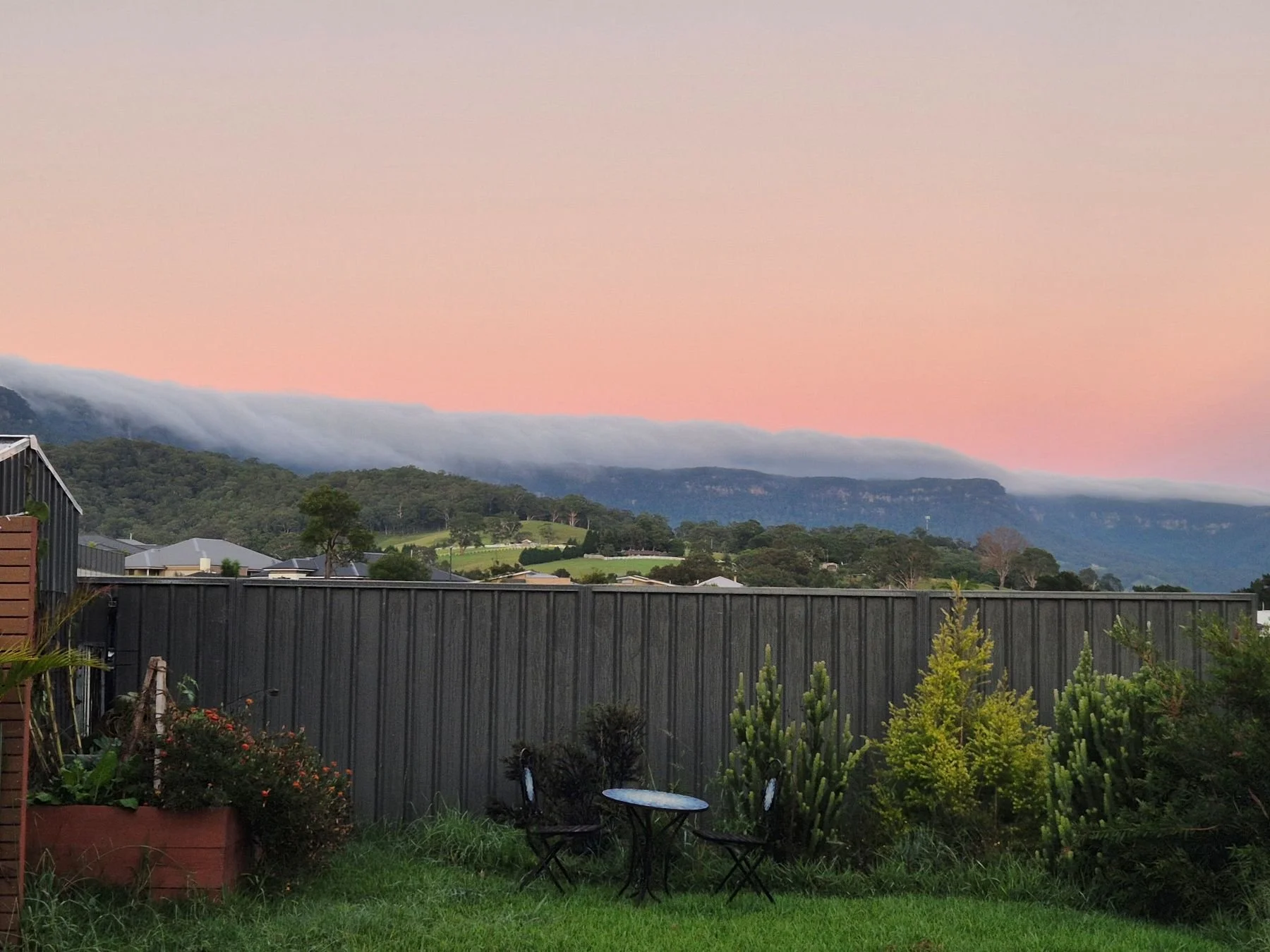
My backyard, with some of our native plants, including melaleuca, woolly bush and bottlebrush. The Illawarra Escarpment is in the background.
The more I noticed the birds visiting our garden, the more I began noticing the wildlife all around me during my working week, too. I’m lucky enough to live and work in a very beautiful part of the world, with breathtaking views of the Illawarra escarpment to the West, and the ocean to the East. Not only that, many of the schools and towns I work in have taken the time to plant native gardens, too. Stopping to watch the local birdlife every day, no matter where I am, has become a way to reset, take a deep breath and carry on with the next thing, feeling just that little bit more grounded. Drawing birds and native plants grew naturally from that practice of observation, and eventaully became the beginning of Wattle and Wags.
Every bird species in this first collection has its own story. Here are four birds that have left a lasting impression on me.
Australian Magpie
I think many Australians have a complicated relationship with our magpies. They’re incredibly charming, intelligent and musical, providing the soundtrack to our mornings with their warbling, melodic voices. At the same time, a small minority become fiercely protective of their nests during spring. Having been dive-bombed by magpies many times myself, I can attest to how terrifying it is! My hot tip? Befriend them. Whenever I come across a maggie, I stop and have a whistling conversation with it, making sure it gets a good look at my face. It might sound like a strange thing to do, but according to the Australian Museum, magpies can remember up to 100 individual human faces. So, get on their good side and hopefully they’ll deem you friend, not foe. When I illustrated these cards, I wanted to capture the curious side of the magpie’s personality, rather than the aggressive side. If you’ve ever had a magpie tilt its head and look quizically at you, you’ll know what I mean. One thing I had some difficulty with was the feathers, especially trying to find the right balance between realistic-looking brushstrokes, and too much ‘mess’. I also wrestled with whether or not to outline the birds and their features, such as the beak, feet and wings. In the end, I decided that linework helped make sense of the birds’ various shapes.
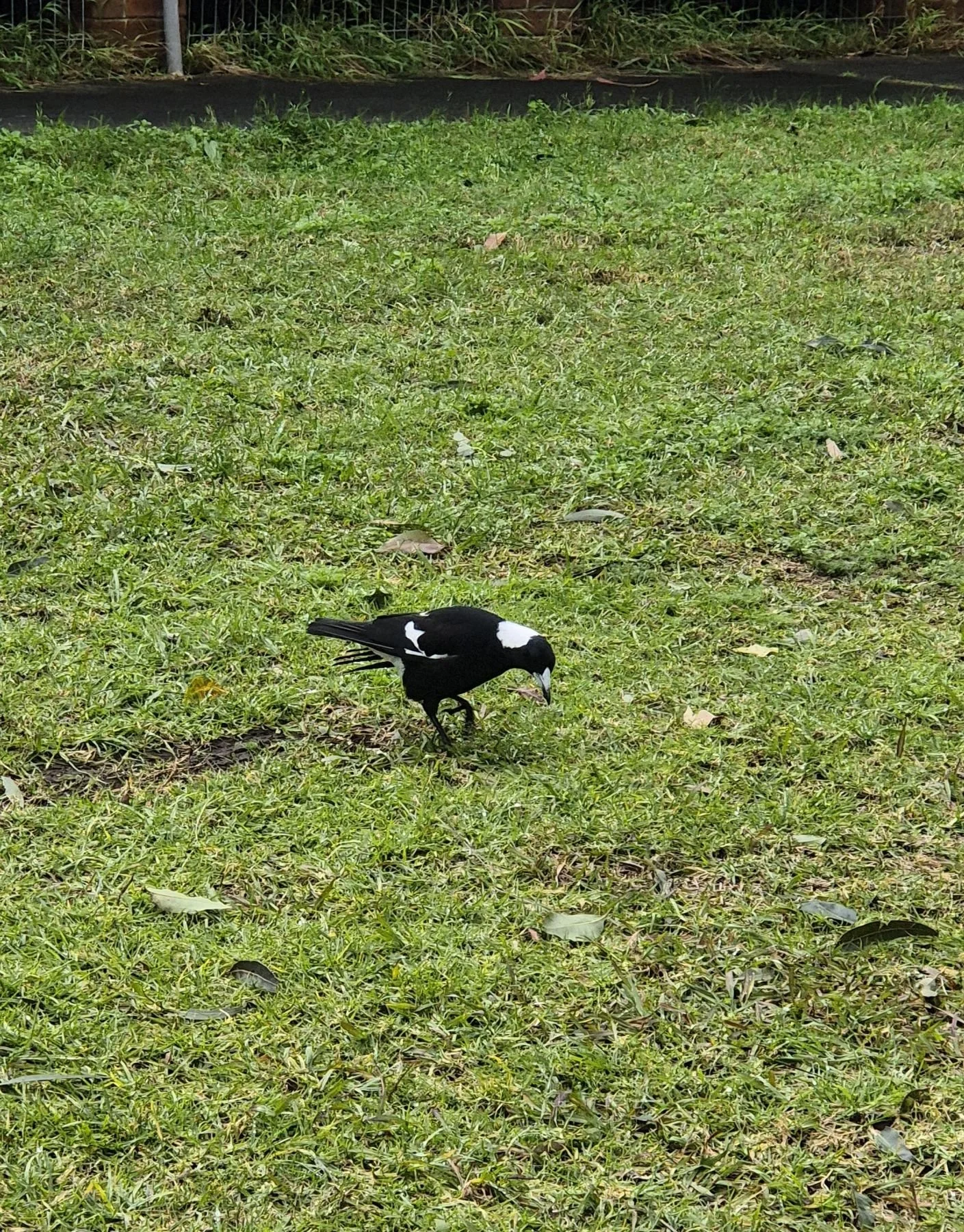
A reference photo of an Australian Magpie.
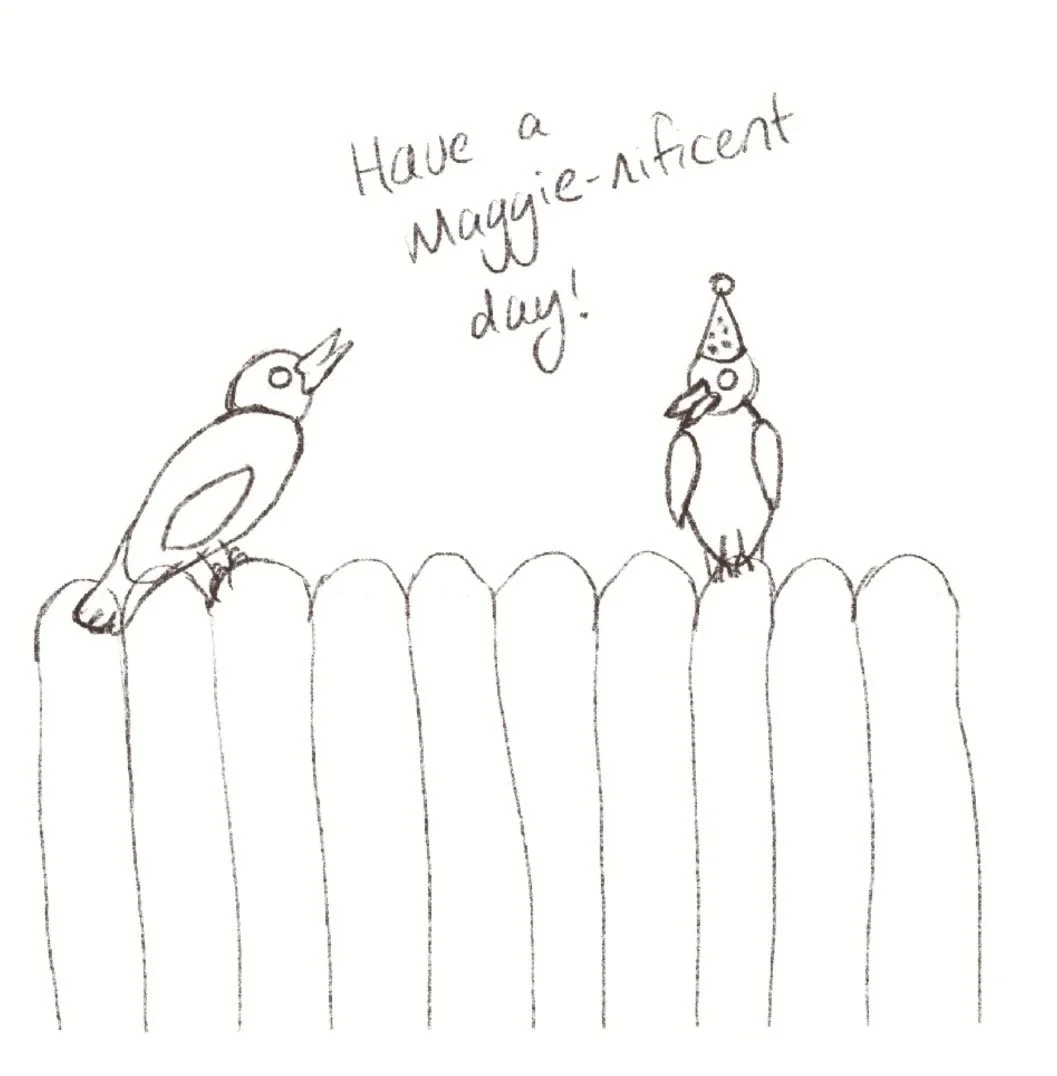
The intial sketch that later became my ‘Have a Maggie-nificent day!’ birthday card.
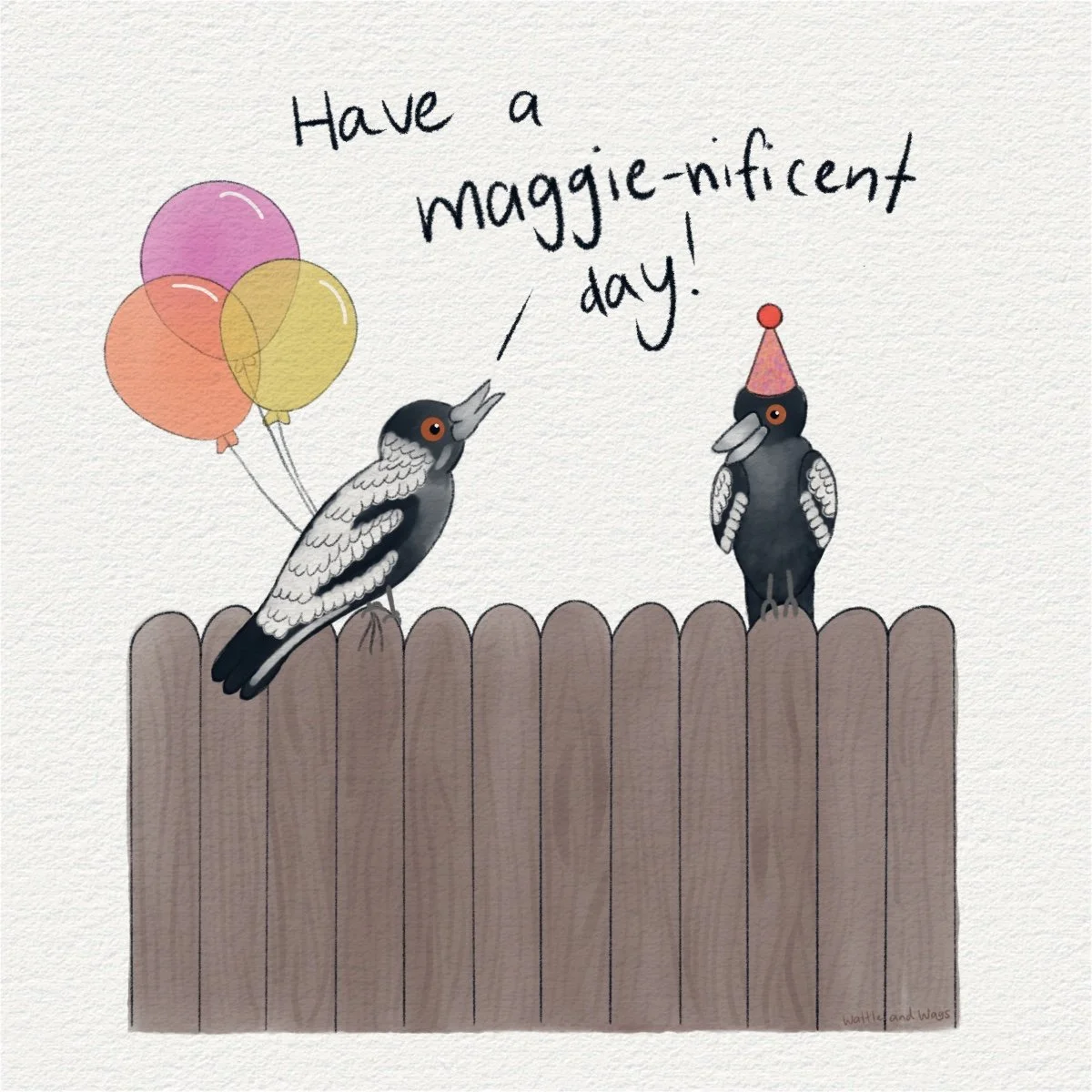
The completed ‘Have a Maggie-nificent day’ birthday card design.
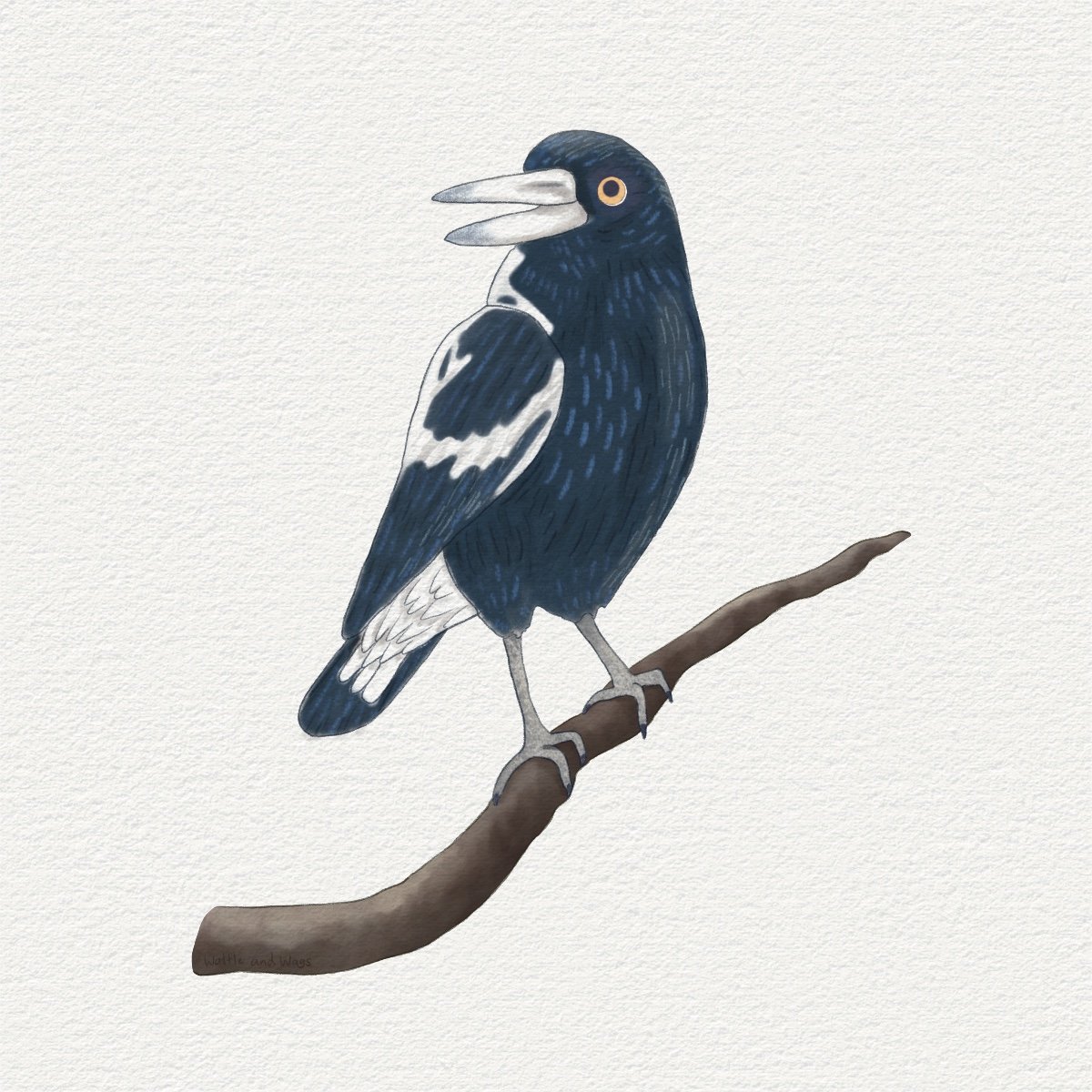
Another of my Australian Magpie greeting cards that is coming soon.
Superb Fairywren
These delightful little birds are just so cute and tiny, and impossibly fast! They seem to never stop flitting from branch to branch. I particularly love how their little tails stick straight up, and they often wiggle their bottoms from side to side, much like Willie Wagtails do. We have a large family group that visits our garden frequently. Most of the birds are soft shades of brown and grey, including the non-breeding males, but during breeding season, the males get a makeover with strking, bright and dark blue plumage. Getting my own reference photos of a bird that rarely stays still was definitely a challenge! Hopefully I’ve managed to express some of their liveliness and energy on the page, as well as how I imagine they look out for each other in their family groups. I loved choosing the vibrant blue colour for the male fairywren’s head and cheeks.
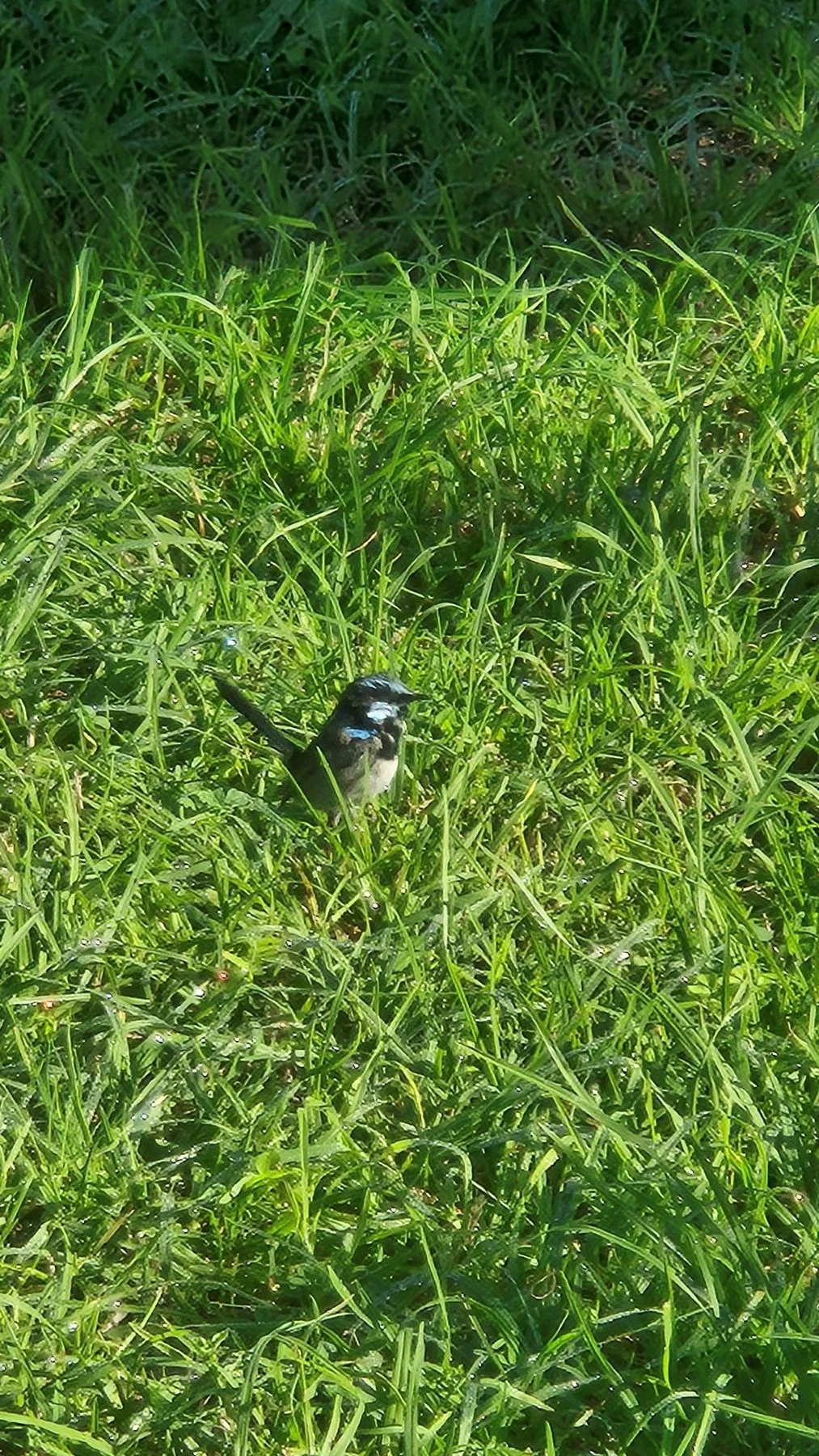
A reference photo of a breeding male Superb Fairywren.
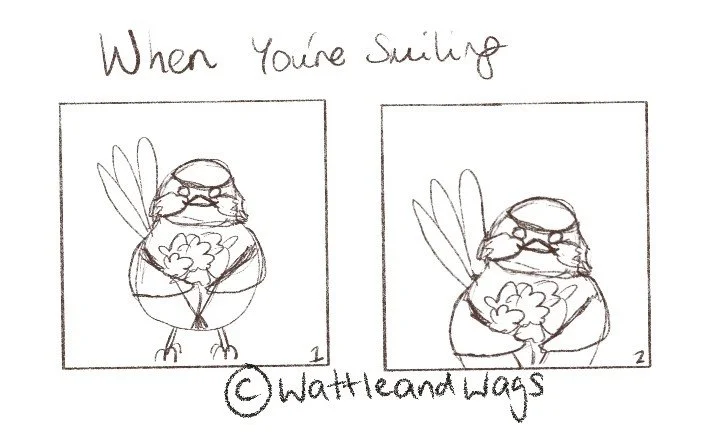
I used thumbnail sketches to experiment with composition and cropping for this Fairywren greeting card.
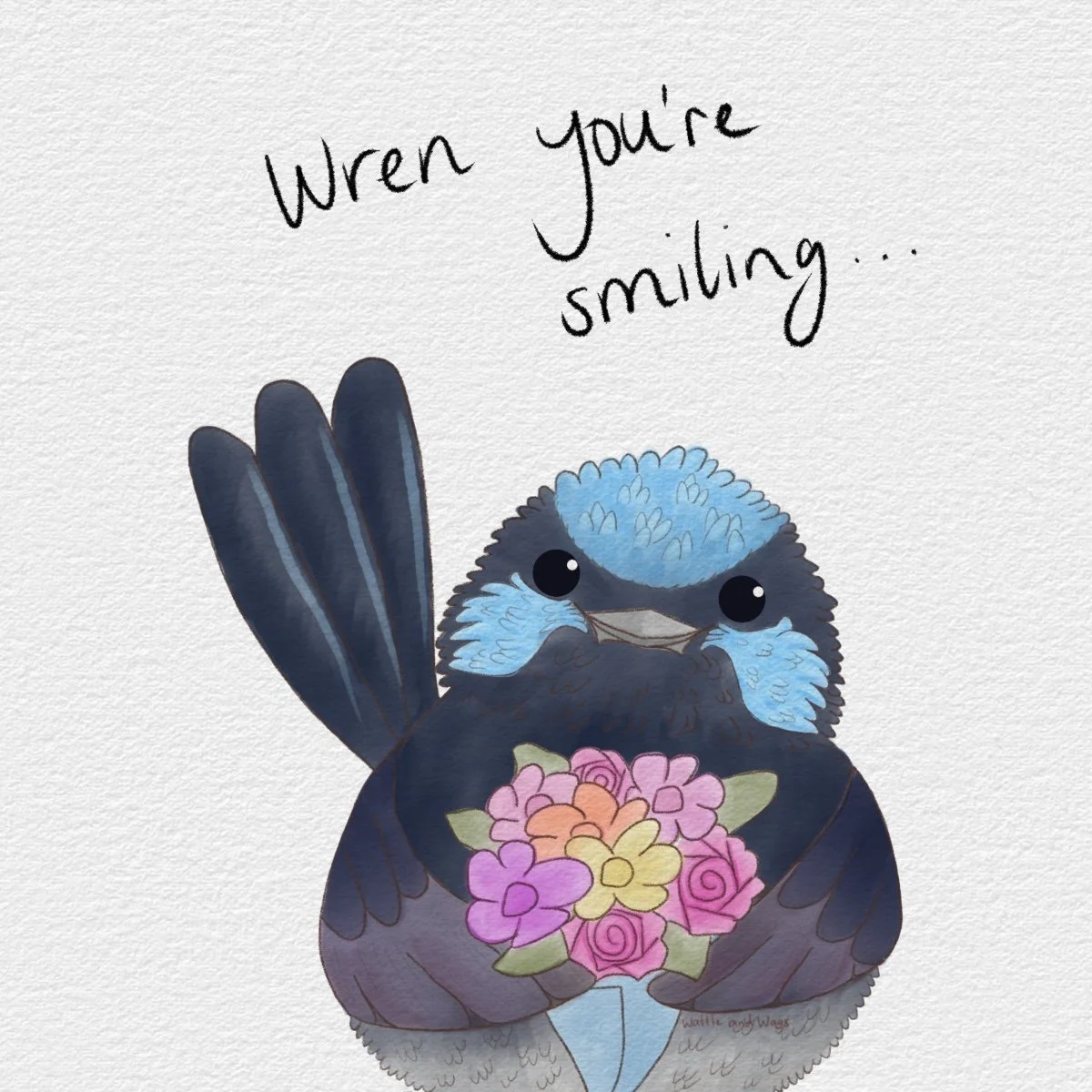
The final design for my Fairywren greeting card, ‘Wren You’re Smiling!’
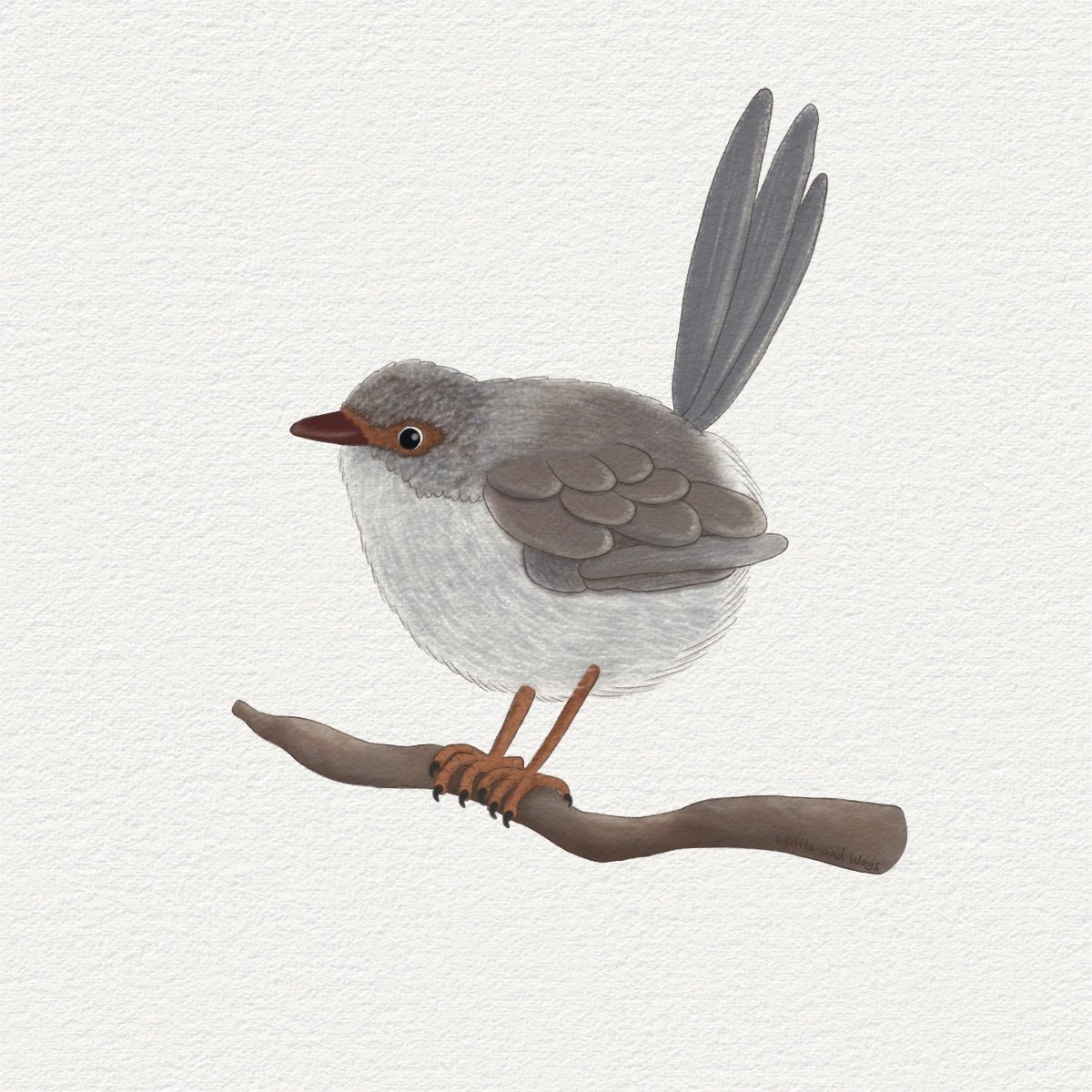
Another of my Fairywren greeting cards, coming soon.
Crimson Rosella
Admittedly, we don’t see many of these guys in our part of the Illawarra. They seemed to be much more common where I grew up and lived until 6 years ago, in the Blue Mountains. However, I still look out for them because they bring such a sense of nostalgia when I see them, their striking red bodies contrasting with their dark blue / black wings. They are similar in size to a Rainbow Lorikeet, but are far less bold and shrill. They often give a cute little ‘twittering’ noise as they fly overhead, or flit from bush to bush in search of seeds and insects. The hardest part about drawing rosellas on my cards was trying to turn a parrot beak into a smile, without anthropomorphising too much. I redrew the facial expressions over and over, trying to get it right.
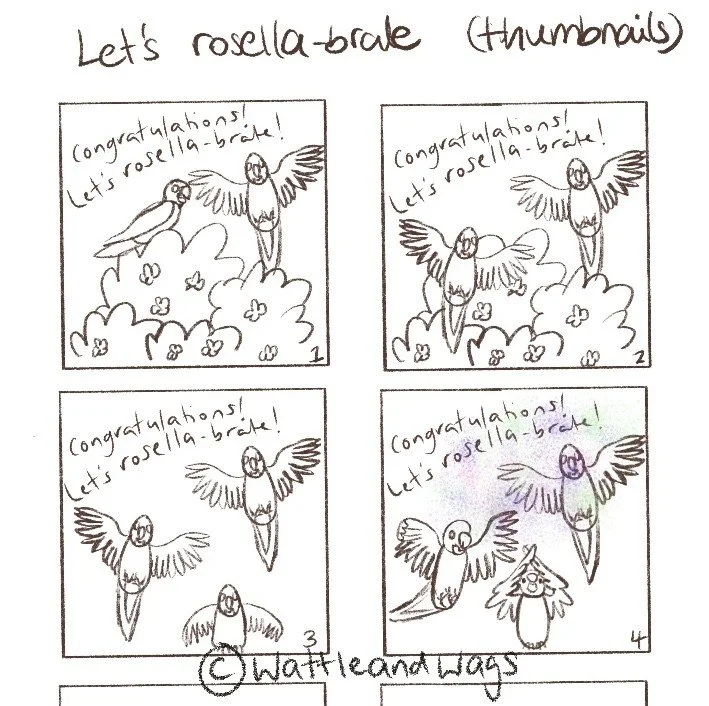
I used thumbnail sketches again for the Rosella greeting card, to experiment with composition and posing of the rosellas.
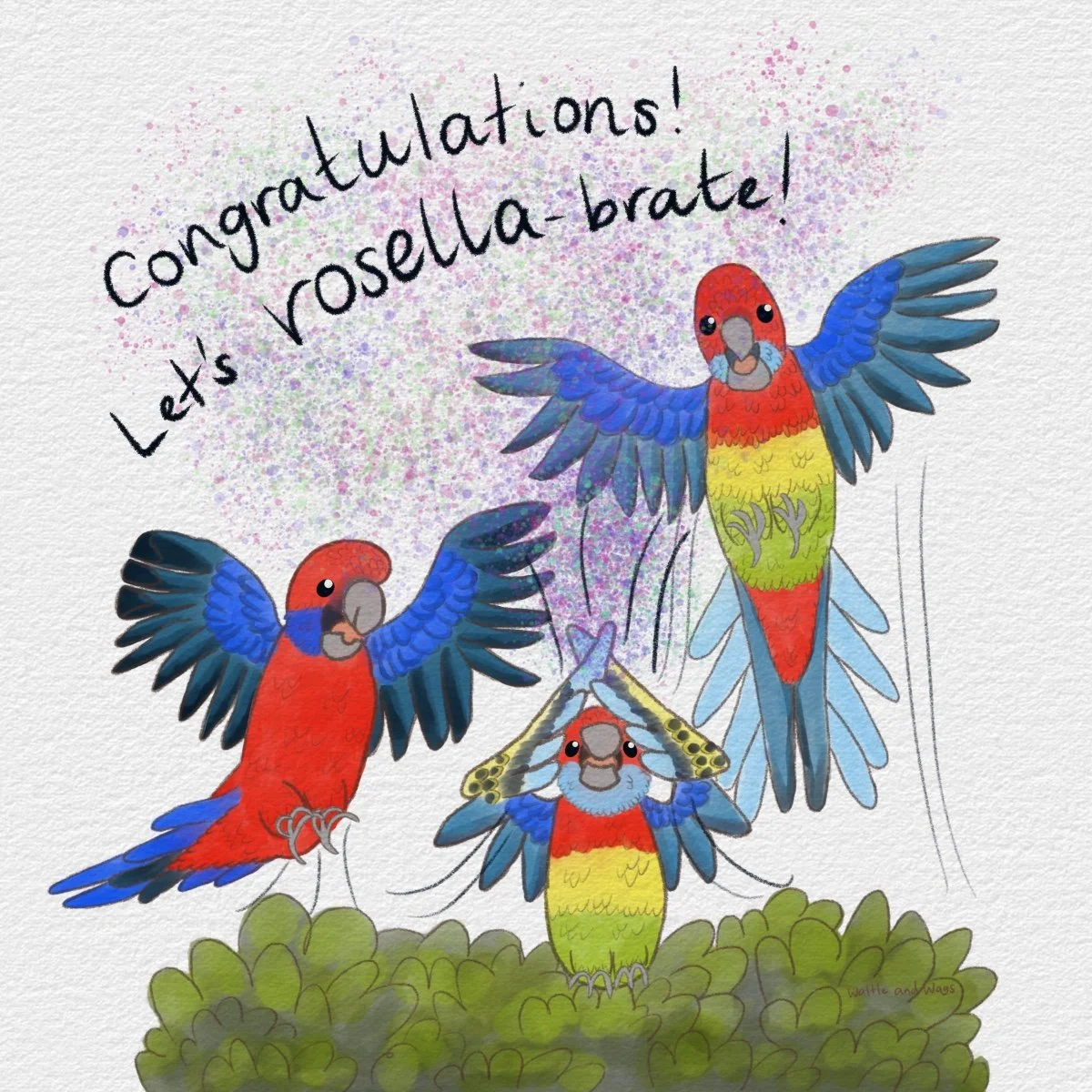
The completed design for my ‘Let’s Rosella-brate’ birthday card. Coming soon is the card above with a more general ‘congratulations’ message.
Eastern Rosella
Eastern Rosellas have recently become quite famous due to a banger of a song, called ‘Eastern Rosellas,’ written by a 7 year old Sydney boy. They are much more colourful than their crimson cousins, and they have beautiful, variegated-looking wing and back feathers that really make them stand out. I see even fewer Eastern Rosellas where I live than I do the crimsons, but it’s always exciting to see the flash of yellow, blue, black, red and green when I do come across them. It was fun adding these extra colours to the Eastern Rosella’s plumage in the illustration. One thing I consisitently have difficulty with is deciding how much detail to put into the feathers - do I outline all of them roughly, or in detail? Do I attempt to show every feather, or just a few?
I hope these glimpses into these four birds help you see them a little differently, as I have. Learning to slow down, pay attention and appreciate the incredible wildlife that’s often right outside my own front door, has been a wonderful gift.
The reason I decided to make my own greeting cards was to be a part of spreading the joy I have found in noticing the little things that make me smile every day. If you’d like to bring a little of that joy into your own life - or send it to someone else - you can find these birds in my very first greeting card collection in my shop. If you’d like to see some more illustrations of Australian birds that I have drawn, you can see them on my portfolio page. I aim to add more of these cards into my shop as my little business grows. If you’d like to receive updates about all things Wattle and Wags, please sign up to my newsletter by completing the contact form.
Thank you for reading, and I hope you will visit again soon. You can also follow me on Instagram for more regular posts and updates about what I’m working on, or the creatures I’ve been noticing lately.
Further Reading
Sources:
Australian Museum. Australian Magpie. Retrieved July 2026
Australian Museum. Superb Fairy-wren. Retrieved July 2026
Australian Museum Crimson Rosella. Retrieved July 2026
Australian Museum Eastern Rosella. Retrieved July 2026
